
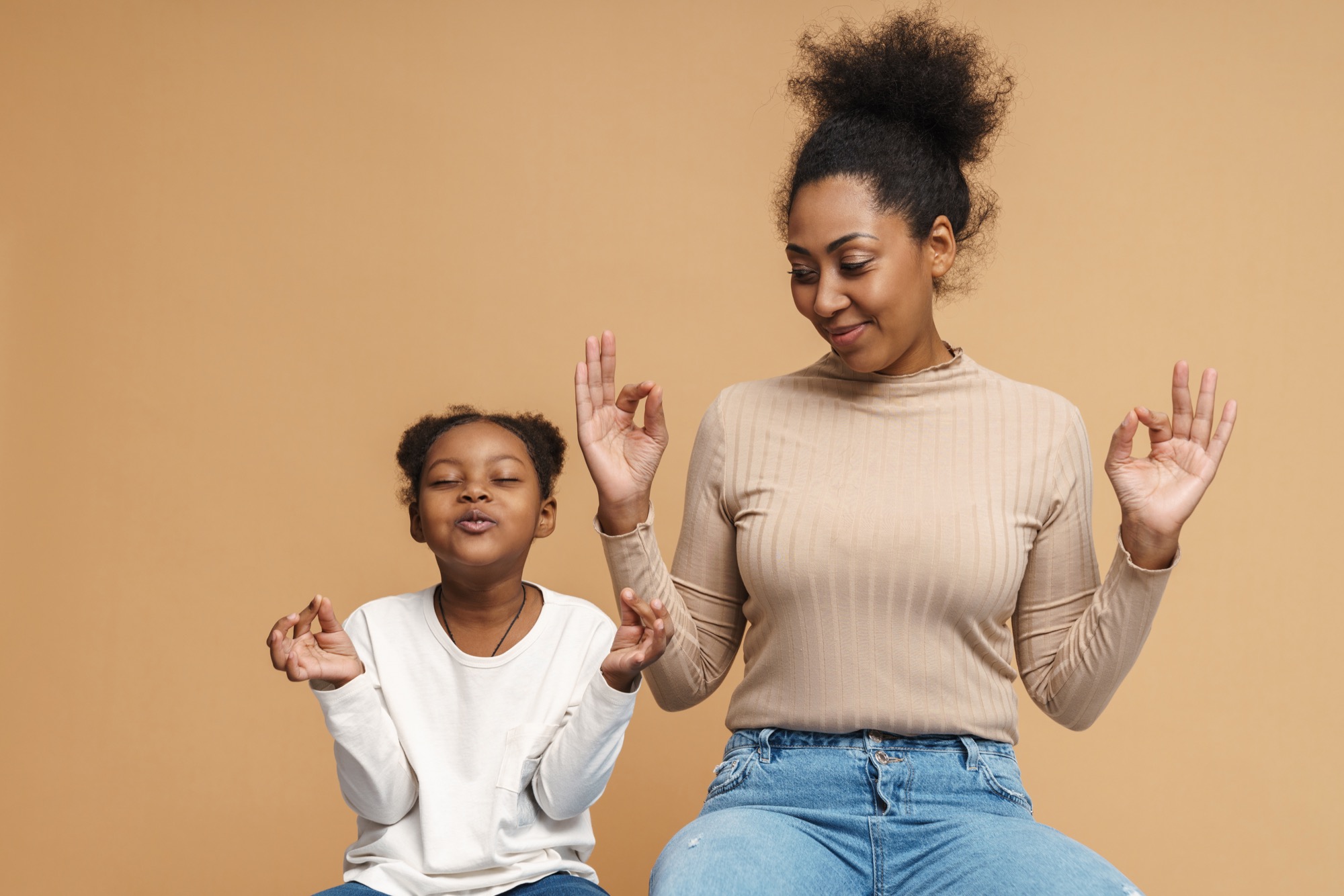
There’s a concept in child development research that explains why the People Presents superpower works on a biological level, not just an emotional one: co-regulation. In simple terms, a child’s nervous system takes real, measurable cues from a caregiver’s nervous system, especially during moments of distress.
This means that during a meltdown, your calm presence isn’t just emotionally comforting — it’s functioning as an actual regulatory input for your child’s activated nervous system. A steady voice, relaxed body language, and genuine calm can help settle a child’s physiological state in a way that words alone cannot, because the nervous system is responding to your state, not primarily to your vocabulary.
This is why the quality of your presence during hard moments matters so much more than the specific strategy you’re using. A perfectly worded response delivered while you’re internally anxious or frustrated transmits that anxiety or frustration regardless of the words chosen. A simple, calm presence — even without a sophisticated verbal strategy — often does more regulatory work.
For children who are neurodivergent or highly sensory-sensitive, co-regulation often matters even more, because these children can be especially attuned to a caregiver’s internal state, even when it’s not being visibly displayed. This is part of why the “parent time-out” concept, covered earlier in the Patience Power superpower, connects so directly here: if you’re too dysregulated to offer genuine co-regulation in a given moment, stepping away briefly to reset often serves your child better than staying engaged while internally overwhelmed.
The reassuring implication of co-regulation is that you don’t need a perfect script for hard moments. You need a regulated nervous system, offered consistently, over time. This is learnable and improvable with practice — the neutral face, the parent time-out, and intentional modeling from earlier superpowers are all, in a sense, in service of this same underlying goal: becoming a more reliable regulatory anchor for your child.
Over time, children who experience consistent co-regulation from a caregiver tend to develop stronger self-regulation of their own — not because they were taught a technique, but because they’ve had years of practice borrowing a calm nervous system until they could build one of their own.
See co-regulation in practice with real families at watchitknowit.com.



0 Comments