
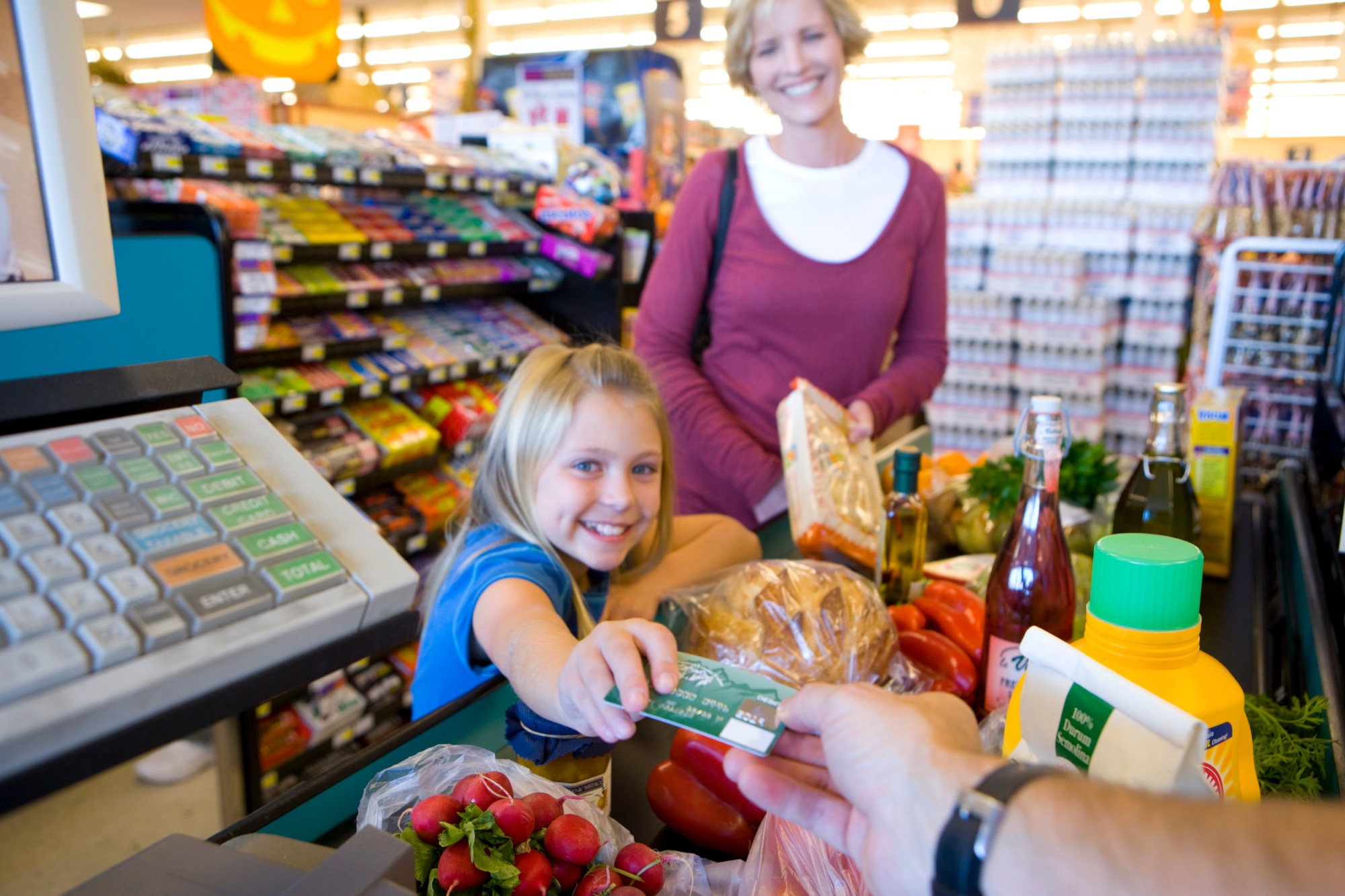
The grocery store checkout line, stocked at kid height with candy, is basically a laboratory for Delayed Gratification. It’s also one of the most common places this superpower gets abandoned, simply because it’s public and exhausting. Here’s how to use it on purpose instead.
Preview before you walk in.
“We’re getting five things on the list. We’re not getting candy today, but you can help me find everything.” This single sentence does the heavy lifting — it sets the expectation before the temptation appears, rather than negotiating it in real time under pressure.
Give your child a job.
Handing over the list, letting them find an item, or having them hold the smallest item in the cart shifts their attention from “waiting for nothing to happen” to “actively participating.” A wait with a task attached is dramatically easier than a wait with nothing to do.
Hold the line calmly if the request comes anyway.
“I know you want it. We said no candy today. You can pick one thing for next time.” Notice this isn’t harsh — it acknowledges the want while holding the boundary. This is the Delayed Gratification superpower in its purest form: the want is real and valid, and it can still wait.
Expect an escalation the first several times you hold this line, if it’s new.
If candy has worked before, your child’s brain has good reason to try harder before giving up on a strategy that’s worked in the past. This escalation is a sign the old pattern is breaking down — not a sign to abandon the new one.
Praise the specific moment of success afterward, even a small one.
“You really wanted that candy, and you didn’t ask a second time. That’s exactly the kind of patience that gets easier every time you practice it.” Naming the skill helps a child recognize they have it, rather than experiencing the outcome as something that just happened to them.
Over several trips, most kids’ checkout-line behavior improves significantly — not because the temptation gets weaker, but because the child’s practiced capacity to tolerate it gets stronger.
Watch real checkout-line strategies modeled at watchitknowit.com.



0 Comments