
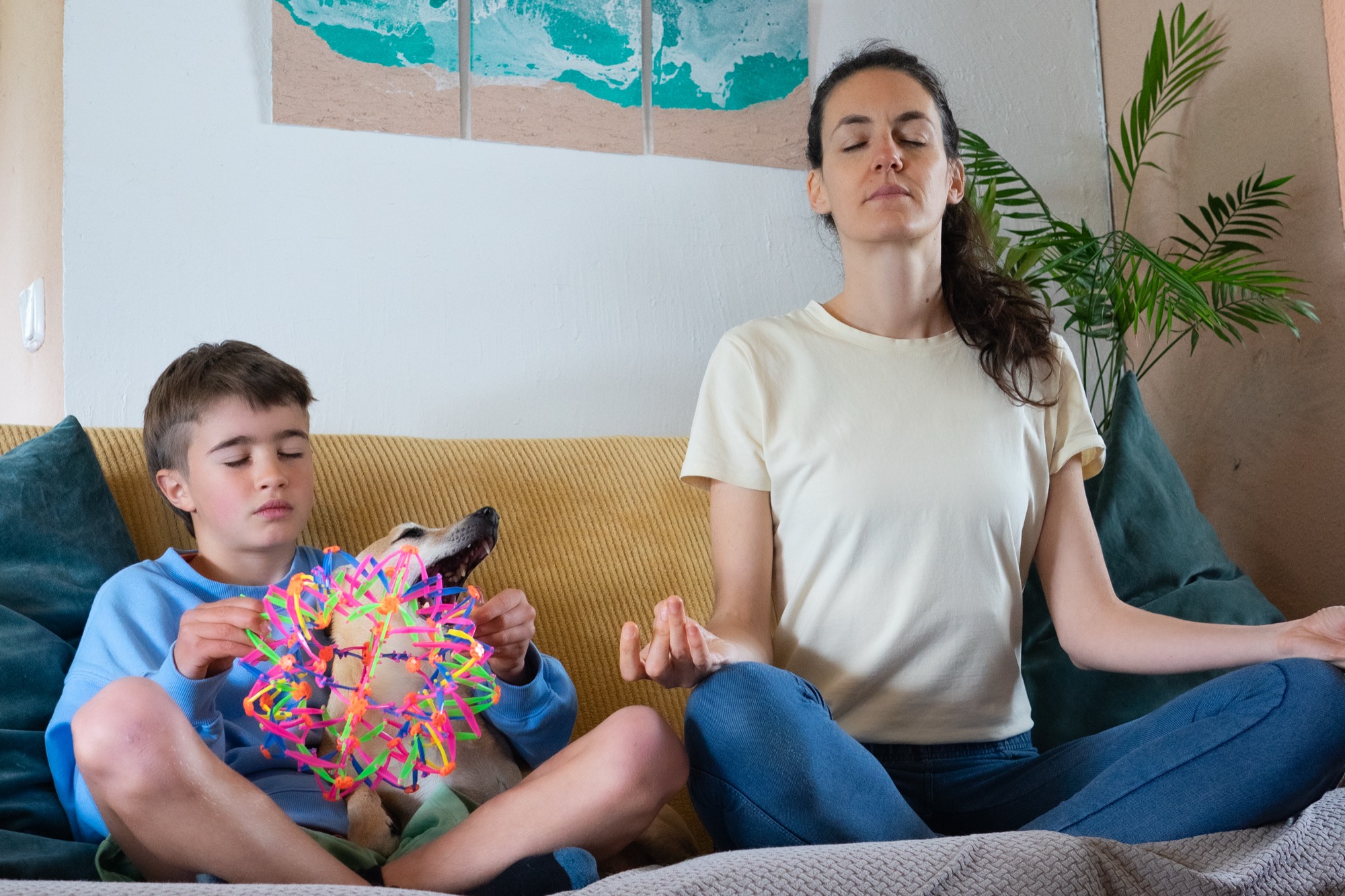
For children with heightened sensory sensitivity — many autistic kids and kids with sensory processing differences among them — a parent’s emotional state isn’t just observed. It’s often directly absorbed into the child’s own nervous system, making Total Recall an even higher-stakes superpower than it is for neurotypical families.
Co-regulation is the technical term for this: a child’s nervous system, especially a young or sensory-sensitive one, takes real cues from a caregiver’s regulation state, not just their words. A parent who is outwardly saying “it’s okay” while internally anxious and physically tense is transmitting the tension, not the reassurance — and a sensory-sensitive child is often exceptionally good at picking up on that mismatch, even without being able to name what they’re sensing.
This means that during a meltdown, your own regulation isn’t a nice-to-have alongside your strategy — it often is the strategy. A calm, steady presence can help settle an escalating nervous system in a way that words alone cannot, simply because the child’s system is responding to what it’s picking up from yours, largely independent of the specific words used.
This is also why the “parent time-out” concept matters so much for families of sensory-sensitive kids. If you’re too dysregulated in a given moment to model calm, stepping away briefly — when it’s safe to do so — often serves the child better than staying engaged while visibly overwhelmed yourself. You’re not abandoning the moment; you’re protecting the quality of what gets modeled in it.
Sensory-sensitive kids also tend to absorb environmental tension with unusual acuity — a tense household, even without raised voices, registers clearly. This doesn’t mean walking on eggshells or suppressing normal life stress. It means recognizing that for these kids especially, your visible response to stress is doing more teaching than almost anything you say directly about how to handle big feelings.
The reassuring flip side: because sensory-sensitive kids absorb regulation so acutely, they also respond unusually well to genuinely calm modeling, once it’s consistently available. The same sensitivity that makes tension hard to hide also makes real calm land powerfully.
See co-regulation strategies modeled with real families at watchitknowit.com.



0 Comments