
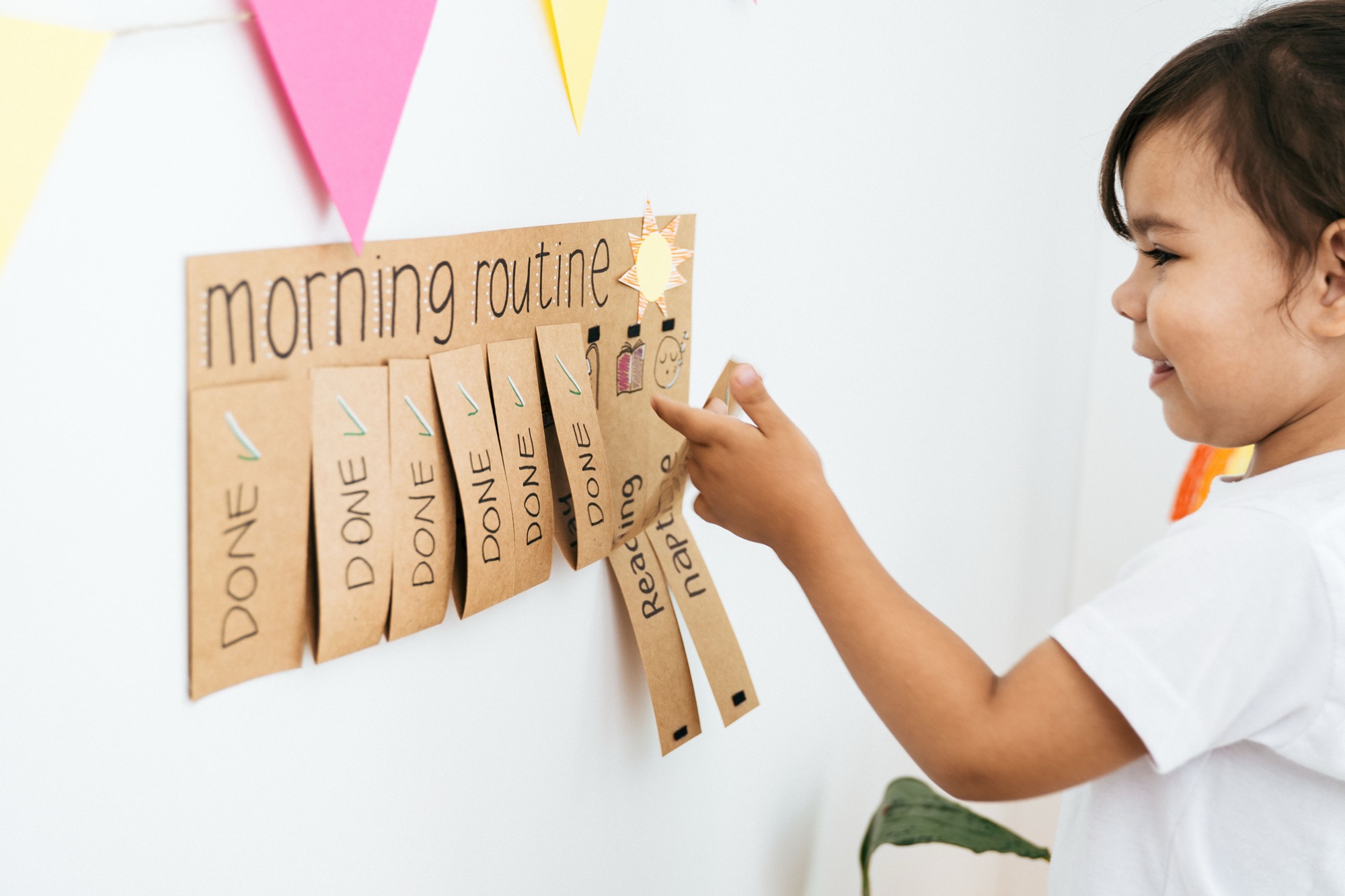
If you’ve ever noticed that your child does better on school days than on chaotic weekends, you’ve already seen the Structure Zone at work. It’s the first of the Seven Superpowers, and it’s built from three unglamorous ingredients: consistency, predictability, and follow-through.
Structure doesn’t mean rigidity, and it isn’t about running your household like a military unit. Think of it the way Dr. Maria Gilmour describes it in her book: instead of plywood, concrete, and 2x4s, a family structure is built from the parent doing the same thing every time (consistency), the child knowing what to expect (predictability), and the parent actually delivering on what was promised (follow-through). Remove any one leg, and the whole structure wobbles.
Here’s why it works. A child’s nervous system is constantly scanning for safety. When the world feels unpredictable — bedtime happens at 7:00 one night and 9:30 the next, “no” sometimes means no and sometimes means “ask five more times” — that uncertainty registers as low-grade threat. The brain stays on alert. Big behaviors follow. But when a child can predict what’s coming next, their nervous system gets to relax. Cooperation becomes possible because safety comes first.
This is also why Structure Zone is often the first superpower parents should build, even before tackling harder behaviors. You can’t out-discipline an unpredictable environment. A visual schedule on the wall, the same three steps before bed every night, a consistent response to whining at the grocery store — these small, boring repetitions are doing enormous psychological work.
Consider Mister Rogers. Every episode, he walked through the door, hung up his jacket, put on the same cardigan, and swapped his shoes for sneakers — in the same order, every single time. Child development experts have pointed to this ritual as a masterclass in predictability. Children didn’t just enjoy the show; they felt safe inside it, because they always knew what was coming next.
The good news is that building a Structure Zone doesn’t require an overhaul. Dr. Gilmour recommends starting with just one part of the day — often bedtime or the after-dinner routine — and holding it steady for two to four weeks before expanding. You’re not trying to control your child. You’re building the invisible scaffolding that lets them feel secure enough to succeed.
Where to start this week:
Pick one recurring trouble spot — usually bedtime, mornings, or transitions — and write down the same three to five steps, in the same order, every time. Post it where your child can see it. Then hold the line, gently, even when you’re tired. The magic isn’t in any single rule. It’s in the repetition.
Want to see a real Structure Zone routine in action? Watch short video demonstrations at watchitknowit.com.



0 Comments